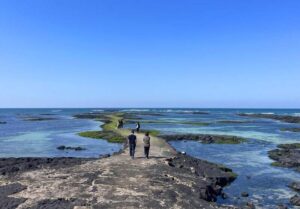
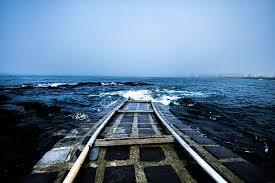
“Multtae,” literally meaning “tide time” in Korean, refers to the collective knowledge and system used to predict the rise and fall of ocean tides — a vital practice that has guided coastal life across the Korean Peninsula for centuries.
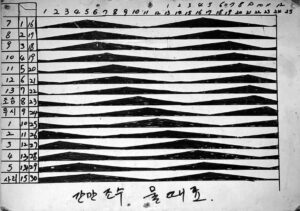
Recently designated as a National Intangible Cultural Heritage officially on March 26, 2026, multtae is more than a scientific understanding of tides. It serves both as a calendar of tidal cycles and as a practical system enabling communities to anticipate when the sea will recede and return.
A System Rooted in History
Records of tidal knowledge can be traced back to the Goryeo dynasty, where observations of tidal patterns were documented in historical texts. By the Joseon period, this knowledge had evolved into more structured systems, with terms such as “hanmul” (first tide) and “dumol” (second tide) used to describe stages within the tidal cycle.
Communities developed their own localized ways of counting and interpreting these cycles, reflecting regional variations in geography and sea conditions. Over time, multtae became deeply embedded in everyday life, used not only for fishing but also for navigation, salt production, and coastal travel.
Living with the Rhythm of the Sea
Beyond its practical function, multtae represents a way of understanding nature through observation and experience. Before the era of modern forecasting, coastal communities relied on this accumulated knowledge to decide when to set out to sea, when to harvest, and when to wait.
In this sense, multtae is not just about measuring time, but about living in rhythm with the ocean. It reflects a relationship where the sea is not controlled, but read, respected, and followed.
This is why it has been designated as an intangible cultural heritage — not as a fixed technique, but as a shared body of knowledge passed down through communities.
A Natural Connection to Jeju
On Jeju Island, where daily life has long been shaped by the surrounding sea, this rhythm remains especially relevant.
The island’s iconic haenyeo, or female divers, have for generations relied on a deep understanding of tidal patterns to guide their work. Knowing when tides are calm, when currents shift, and when marine life is most accessible is essential to both safety and livelihood.
While not always referred to explicitly as “multtae,” the same principles underpin these practices, forming an unspoken but enduring knowledge system.
A Tradition That Still Moves Today
Even in an age of digital forecasts and mobile applications, the logic of multtae continues to be used and understood. It remains a reminder that long before technology, people developed precise ways to interpret the natural world around them.
In recognizing multtae as cultural heritage, Korea acknowledges not just a method of reading tides, but a way of life shaped by patience, observation, and respect for the sea.