
In most modern cities, agricultural labor is almost invisible.
Food appears cleaned, packaged, and priced under fluorescent supermarket lights, detached from the people and timing required to produce it.
But during garlic season in Jeju Island, that invisible process becomes unusually visible again.
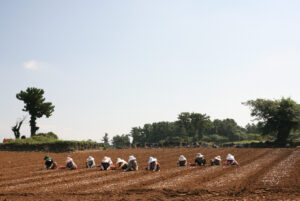
A Short and Intense Harvest Window
Each year between May and June, parts of Jeju enter garlic harvest season, particularly in areas such as Daejeong-eup in the island’s southwest region.
The harvest window is short, concentrated, and labor-intensive. Garlic must be collected within a narrow seasonal period, creating urgency across farming communities.
Unlike industrialized imagery of agriculture, much of the process still depends heavily on manual labor.
When Harvest Becomes Collective Work
One of the most distinctive aspects of Jeju’s garlic season is how broadly the labor expands beyond farms themselves.
Local governments, agricultural cooperatives, volunteers, and community groups often participate in supporting harvest efforts, especially amid ongoing labor shortages.
This reflects an older Jeju concept known as “수눌음 (sunuleum),” a tradition of neighbors helping one another through physically demanding work.
In this context, garlic season becomes more than agricultural production.
It becomes a visible form of collective participation.
A Different Relationship Between People and Food
Modern urban life tends to separate consumption from production. Most people encounter food only at the final stage of the process.
Garlic season briefly reverses that separation.
The harvest exposes:
- physical labor
- seasonal dependence
- manpower shortages
- and the reality that food systems still rely heavily on coordinated human effort
For a few weeks, the island’s rhythms become shaped by harvest schedules rather than convenience.
Geography Still Shapes Identity
Like many of Jeju’s seasonal products, garlic is also tied closely to the island’s environmental identity.
Jeju’s volcanic soil and coastal climate are frequently used to characterize the region’s agricultural products, reinforcing how geography continues to shape local branding and food culture.
But beyond branding, garlic season reveals something more grounded: the continued importance of seasonal agricultural life within a rapidly modernizing society.
What Garlic Season Reveals
Viewed from a distance, garlic may seem like an ordinary ingredient.
But during harvest season in Jeju, it becomes possible to see the systems around it:
- community cooperation
- seasonal urgency
- shared labor
- and traditions adapted to modern pressures
In many places, efficiency has made food production feel abstract.
Jeju’s garlic season does the opposite.
It makes the human effort behind everyday life visible again.